Every pet owner shares a common, terrifying nightmare: looking around and realizing your furry family member is missing. It happens in the blink of an eye a gate left unlatched, a sudden loud noise during a walk, or a momentary distraction.
Because June is National Microchipping Month, we want to shed light on one of the simplest, most effective ways to ensure your pet always finds their way back to you.
If your pet isn’t microchipped yet or if you haven’t updated your contact information in a while ere is everything you need to know about this tiny lifesaver.
What Exactly is a Microchip?
A common misconception is that a microchip works like a GPS tracker. It doesn’t track your pet’s location in real-time. Instead, it acts as a permanent, unalterable digital ID card.
The chip itself is incredibly small about the size of a single grain of rice.
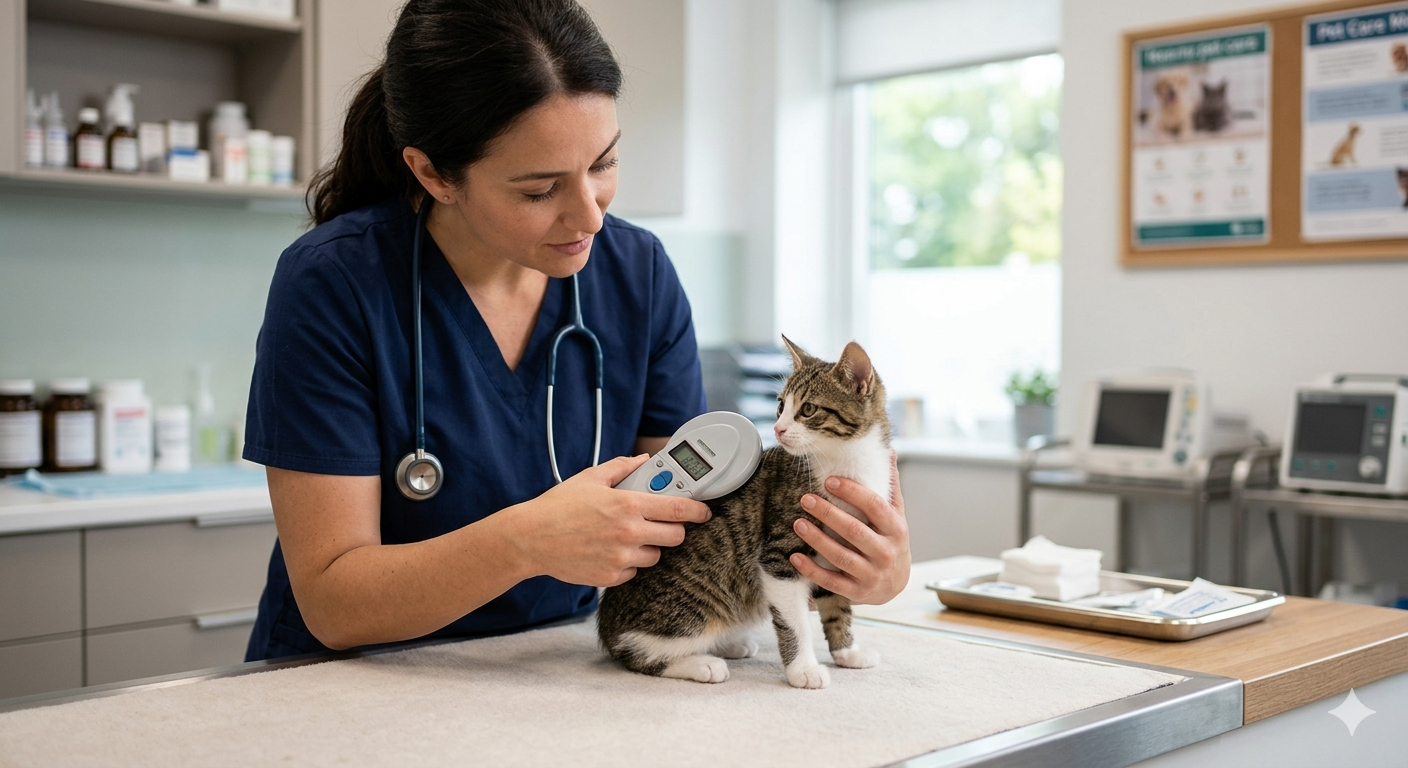
When a stray pet is brought into a clinic like Erin Centre Animal Hospital or a local shelter, a veterinarian or shelter worker will pass a specialized scanner over the pet’s shoulder blades. The radio waves from the scanner activate the chip just long enough to display a unique identification number.
That number links directly to your contact information in a secure national registry database, allowing us to call you immediately.
Why Relying on Collar Tags Isn’t Enough
Standard ID tags and collars are a great first line of defense, but they aren’t foolproof.
If you’re worried about the procedure causing your pet pain, you can take a deep breath! Microchipping is incredibly quick, routine, and requires zero anesthesia.
1.The Health Check: 1-2 minutes.
We first scan your pet to ensure they don’t already have an existing, hidden chip from a previous shelter or breeder.
2.The Injection: A few seconds.
Using a specialized sterile needle, the microchip is injected just under the loose skin between your pet’s shoulder blades. It feels exactly like a routine vaccination shot.
3.The Final Scan: 30 seconds.
We scan your pet one more time to verify the chip is active and reading the correct identification number.
Did you know? We don’t just microchip dogs and cats! At Erin Centre Animal Hospital, we can also microchip rabbits to ensure their safety.
The Golden Rule: Don’t Forget to Register!
A microchip is only as good as the information attached to it. Every year, thousands of pets are scanned at shelters, a chip is found, but the contact info is completely out of date or blank.
If you move to a new house, change your phone number, or adopt a pet who is already chipped, you must update your details in the microchip registry.
Celebrate Microchipping Month with Us
Let’s make sure your pets are fully protected for all your summer adventures. If your pet needs a chip, or if you aren’t sure if their current chip is working properly, give us a call or book an appointment online. We can quickly scan your pet during a routine visit to give you complete peace of mind!
Frequently Asked Questions (FAQs)
A pet microchip is a tiny electronic chip, about the size of a grain of rice, implanted under your pet’s skin. It stores a unique identification number linked to your contact information in a secure registry.
Does a microchip track my pet’s location?
No. A microchip is not a GPS tracker. It does not provide real-time location tracking. It only helps identify your pet when scanned by a veterinarian or animal shelter.
Is microchipping painful for pets?
Microchipping is a quick and routine procedure that feels similar to a standard vaccination. Most pets experience only brief discomfort, and anesthesia is typically not required.
At what age should my pet be microchipped?
Puppies and kittens can usually be microchipped as early as 6–8 weeks of age. Your veterinarian can recommend the best timing based on your pet’s age and health.
How much does pet microchipping cost?
The cost varies by veterinary clinic and location. Contact Erin Centre Animal Hospital for current pricing and appointment availability.
Why is National Microchipping Month important?
National Microchipping Month, observed in June, raises awareness about the importance of permanent pet identification and encourages pet owners to microchip their pets and keep their registration information up to date.