Bad breath in your dog or cat might seem like a small thing. Most pet owners just wave a hand in front of their face and move on with their day.
But that smell is often the first clue that something bigger is going on inside your pet’s mouth.
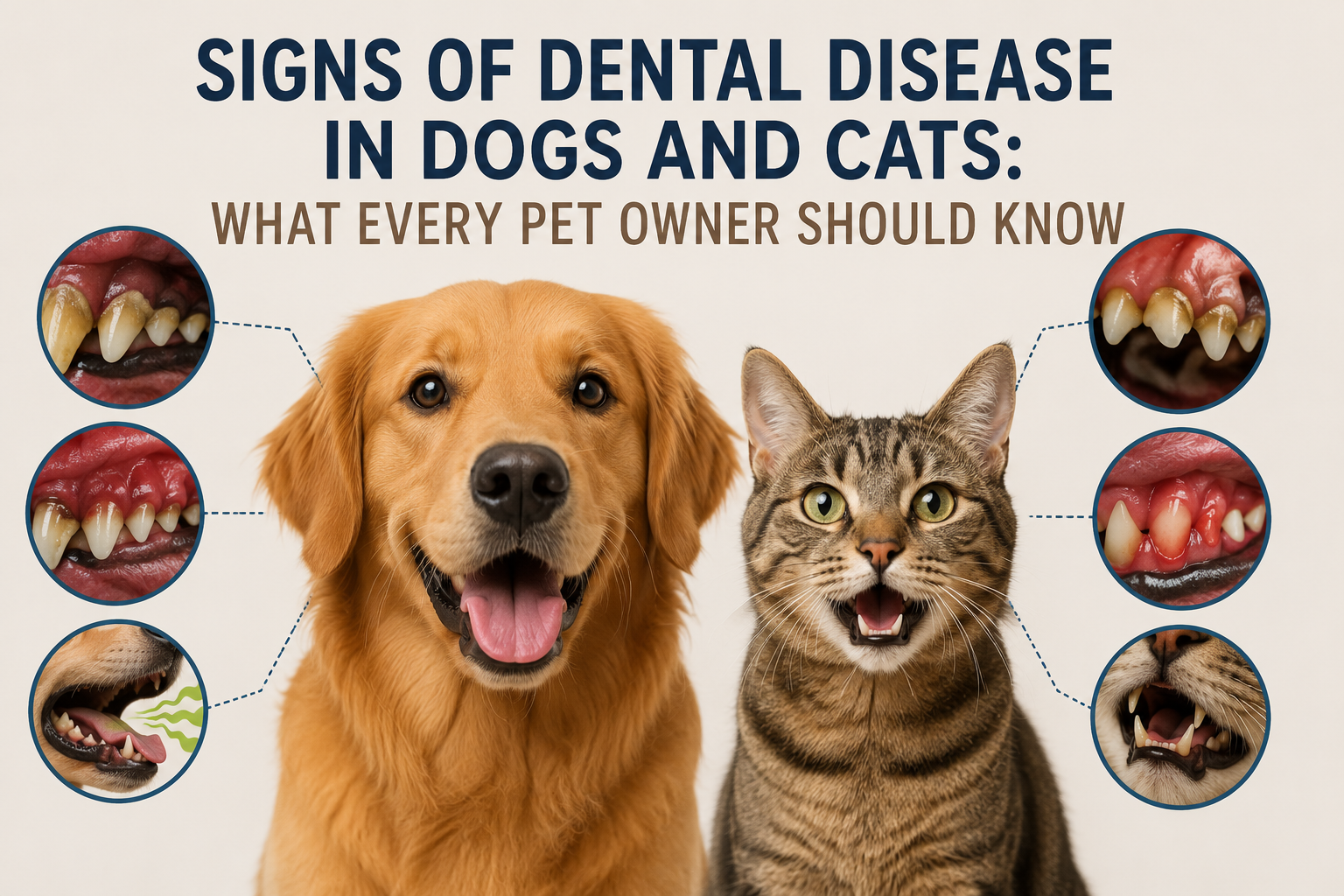
Dental disease is one of the most common health problems in dogs and cats, yet it often goes unnoticed until it’s advanced. Recognizing the signs of dental disease in dogs and cats early can save your pet from pain, tooth loss, and even damage to internal organs.
At Erin Centre Animal Hospital in Mississauga, we see this every week. This guide will walk you through exactly what to watch for, why it matters, and what you can do about it.
Key Takeaways
Bad breath is often the first and most overlooked sign of dental disease in pets.
Dog dental disease signs and cat dental disease symptoms can look different due to how each species hides pain.
Left untreated, gum disease can lead to tooth loss, jaw damage, and infections that spread to the heart, liver, and kidneys.
Most pet dental disease is preventable with regular brushing, dental-friendly diets, and professional cleanings.
Cats are especially good at hiding oral pain, so subtle behavior changes matter more than obvious symptoms.
Regular veterinary dental checkups catch problems before they become painful or expensive to treat.
What Is Dental Disease in Pets?
Dental disease, often called periodontal disease, is an infection of the tissues that support the teeth. It starts small, with a thin layer of plaque building up on the tooth surface.
If that plaque isn’t removed, it hardens into tartar within days. Bacteria then work their way under the gumline, causing inflammation and, eventually, tissue and bone loss.
By the time most owners notice a problem, the disease has usually been developing for months, sometimes years.
Why Dental Health Matters So Much
Pet dental disease isn’t just about smelly breath or yellow teeth. It’s a real medical issue with consequences that reach far beyond the mouth.
The Hidden Health Risks
Bacteria from infected gums can enter the bloodstream. From there, they can travel to the heart, kidneys, and liver, contributing to more serious systemic disease.
The Pain Factor
Dogs and cats are experts at hiding pain. A pet with a cracked or infected tooth may still eat normally, which is why so many cases go undetected until a vet exam.
The Financial Side
Catching dental disease early usually means a straightforward cleaning. Waiting too long often means extractions, antibiotics, and a longer, more expensive procedure.
Signs of Gum Disease in Dogs
Dog dental disease signs tend to be a bit easier to spot than in cats, mainly because dogs are less guarded about showing discomfort.
Here’s what to watch for:
Persistent bad breath that doesn’t improve with a breath mint or chew toy
Yellow or brown buildup along the gumline
Red, swollen, or bleeding gums
Loose or missing teeth
Dropping food while eating or chewing on one side
Pawing at the face or mouth
Reduced interest in chew toys or hard kibble
Visible pus or discharge near the teeth
Excessive drooling, sometimes tinged with blood
Practical Example
A seven-year-old Labrador may seem perfectly happy and still eat his usual meals, but if his owner notices he’s started favoring soft treats over his crunchy dental chews, that shift alone can point to early gum disease.
Signs of Gum Disease in Cats
Cat dental disease symptoms are often more subtle. Cats instinctively mask pain as a survival mechanism, so owners need to pay closer attention to small behavior changes.
Watch for:
Bad breath (a common early warning sign)
Reluctance to eat dry food or chewing only on one side
Weight loss despite a normal appetite
Drooling or wet fur around the mouth
Pawing at the face
Reduced grooming, leading to a scruffy coat
Visible red or inflamed gums, sometimes bulging near the back teeth
Hiding more than usual or general irritability
Practical Example
A cat with tooth resorption, a painful condition common in cats, may still approach the food bowl but eat noticeably slower or turn away after just a few bites. Owners often mistake this for pickiness rather than pain.
What Causes Dental Disease
Understanding the root causes helps explain why prevention works so well.
Plaque and Tartar Buildup
Bacteria in the mouth combine with saliva and food particles to form plaque. Without regular brushing, this hardens into tartar within 24 to 72 hours.
Diet and Chewing Habits
Pets that eat mostly soft food or don’t chew much are more prone to buildup, since chewing helps mechanically scrape the teeth.
Age
Dental disease becomes more common as pets get older. Studies suggest that by age three, most dogs and cats already show some signs of gum disease.
Breed and Genetics
Small and toy dog breeds, along with flat-faced cat breeds, tend to have crowded teeth that trap food and plaque more easily.
Underlying Health Conditions
Diabetes, immune disorders, and certain viral infections in cats can make gum disease worse or harder to treat.
What are the signs of dental disease in dogs and cats?
Common signs include bad breath, red or bleeding gums, yellow tartar buildup, loose or missing teeth, drooling, and reluctance to chew. Cats may also show weight loss or reduced grooming, while dogs often paw at their face or drop food while eating.
Step-by-Step Guide to Checking Your Pet’s Mouth
You don’t need special tools to do a basic home check. Here’s how:
Choose a calm moment. Wait until your pet is relaxed, not right after playtime.
Lift the lips gently. Look at the gumline along the front and side teeth.
Check the color. Healthy gums are pink, not red or white.
Smell the breath. Mild odor is normal; strong, foul breath is not.
Look for buildup. Yellow or brown crust near the gumline signals tartar.
Watch the jaw. Note any hesitation, favoring one side, or reluctance to open wide.
Book a vet exam if you notice anything unusual. Home checks help you catch changes, but they don’t replace a professional look under the gumline.
Prevention Tips That Actually Work
Daily Brushing
Brushing your pet’s teeth a few times a week, ideally daily, is the single most effective way to prevent plaque buildup.
Dental Chews and Diets
Veterinary-approved dental chews and diets are formulated to reduce tartar through mechanical scraping action.
Routine Vet Checkups
Annual or biannual dental exams allow your vet to catch problems before they become visible or painful.
Professional Cleanings
Under anesthesia, a vet can clean below the gumline, where most disease actually develops, something no home routine can fully achieve.
Water Additives and Dental Wipes
These are helpful supplements to brushing but shouldn’t be relied on as a stand-alone solution.
Common Mistakes Pet Owners Make
Assuming bad breath is normal. It’s actually one of the clearest early warning signs.
Waiting for obvious pain. Pets rarely show pain the way humans do.
Skipping brushing because the pet resists. Gradual training usually works better than giving up.
Using human toothpaste. This can be toxic to pets and should always be avoided.
Delaying the vet visit. Dental disease progresses faster than most owners expect.
Expert Advice from Erin Centre Animal Hospital
Our veterinary team recommends a simple rule: if you wouldn’t ignore your own bleeding gums, don’t ignore your pet’s either.
We often tell Mississauga pet owners that a quick lip-lift check at home, done weekly, catches most problems long before they become emergencies.
Regular professional dental exams remain the most reliable way to detect disease hiding below the gumline, where home checks simply can’t reach.
Dental Care for Pets in Mississauga
Pet owners across Mississauga bring their dogs and cats to Erin Centre Animal Hospital for routine dental exams, cleanings, and treatment of advanced periodontal disease.
Our team understands the local pet community and works closely with families to build dental care plans that fit each pet’s age, breed, and lifestyle.
If you’re noticing any signs of dental disease in your dog or cat, our clinic offers thorough dental assessments to identify problems early and prevent complications.
People Also Ask
Is dog breath supposed to smell bad?
A little natural odor is normal, but strong or foul breath usually signals plaque buildup or gum infection and should be checked by a vet.
Can dental disease in pets be reversed?
Early-stage gum inflammation, called gingivitis, can often be reversed with cleaning and better home care. Advanced periodontal disease causes permanent damage.
How often should a dog’s teeth be professionally cleaned?
Most dogs benefit from a professional cleaning once a year, though this can vary based on breed, age, and individual dental health.
Do cats need their teeth brushed too?
Yes. Cats are just as prone to dental disease as dogs, and daily brushing helps prevent tartar and gum inflammation.
What happens if pet dental disease is left untreated?
It can lead to tooth loss, chronic pain, and bacteria spreading to major organs like the heart and kidneys.
FAQs
1. What are the earliest signs of dental disease in dogs and cats?
Bad breath and mild gum redness are usually the first signs, often appearing before any visible tartar buildup.
2. Are the signs of gum disease in dogs different from cats?
Yes. Dogs tend to show more obvious signs like pawing at the mouth, while cats hide symptoms and may only show subtle changes like reduced appetite or grooming.
3. Can diet alone prevent dental disease in pets?
Diet helps, but it works best combined with regular brushing and professional cleanings rather than as a standalone solution.
4. Is dental disease painful for pets?
Yes, even though many pets don’t show obvious pain, advanced dental disease is often very uncomfortable and can affect eating and behavior.
5. At what age should pet dental care start?
Dental care should begin in puppyhood or kittenhood, ideally by six months, to build good habits and monitor for early issues.
6. How much does pet dental cleaning cost in Mississauga?
Costs vary depending on the pet’s condition and whether extractions are needed. Erin Centre Animal Hospital can provide a personalized estimate after an exam.
7. Can small breed dogs get dental disease more easily?
Yes, small and toy breeds often have crowded teeth, which makes them more prone to plaque buildup and gum disease.
8. Does bad breath always mean dental disease?
Not always, but it’s one of the most common and reliable early warning signs, so it shouldn’t be ignored.
Conclusion
Recognizing the signs of dental disease in dogs and cats early can make a real difference in your pet’s comfort, health, and quality of life. From bad breath to bleeding gums, these warning signs are your pet’s way of telling you something isn’t right.
The good news is that pet dental disease is largely preventable with consistent home care and regular veterinary checkups.
If you’ve noticed any of these symptoms in your dog or cat, the team at Erin Centre Animal Hospital in Mississauga is here to help. Book a dental exam today and give your pet’s smile the attention it deserves.