Summer is officially here, and if you’ve spent any time walking along Lake Aquitaine or visiting the Totoredaca Dog Park lately, you know that Ontario summers can get incredibly warm and humid.
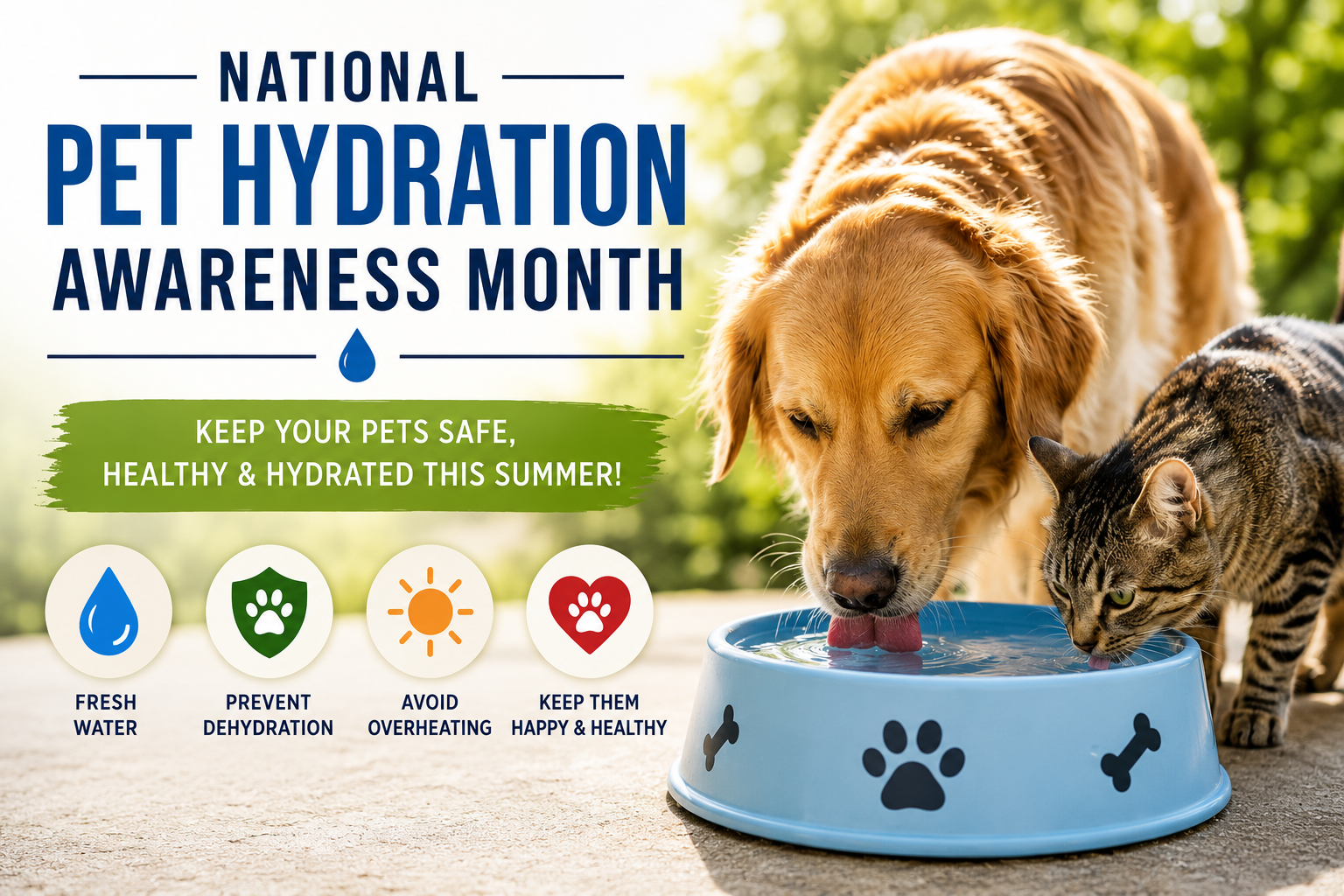
While we readily grab an iced coffee or a water bottle before heading out the door, it’s easy to forget that our furry family members need a major hydration boost too. That is why July is recognized as National Pet Hydration Awareness Month.
Our companion animals’ bodies are made up of roughly 70% to 80% water. This makes proper fluid intake absolutely critical for regulating their body temperature, supporting organ function, lubricating joints, and digesting nutrients. While we can easily cool our bodies down by sweating, dogs and cats can’t. They rely primarily on panting to release body heat. However, constant panting causes rapid moisture loss through evaporation from their lungs and tongue. This means that when they try to stay cool in the summer heat, they deplete their internal water reserves much faster, making them highly susceptible to heat exhaustion and dehydration.
Here is what you need to know to keep your pets safe, happy, and fully hydrated this summer.
5 Warning Signs of Pet Dehydration
Dehydration can escalate quickly in hot weather. Keep a close eye on your pets and check for these common indicators:
- Lethargy or Low Energy: Your usually playful pup or curious kitty suddenly seems completely wiped out or uninterested in moving.
- Dry, Tacky Gums: Lift your pet’s lip and feel their gums. They should feel slick and moist. If they feel sticky, dry, or tacky, your pet needs fluids.
- The “Skin Tent” Test: Gently pinch the loose skin between your pet’s shoulder blades and let go. In a well-hydrated animal, the skin springs back instantly. If it stays up like a tent or sinks down slowly, they are dehydrated.
- Sunken Eyes: If their eyes look dull, dry, or physically sunken into their sockets, this indicates a more advanced and serious stage of dehydration.
Excessive, Heavy Panting: Constant panting that doesn’t subside even after resting in a cool environment.
Feline Health Note: In cats, chronic low water intake can lead to dangerous urinary tract crystals or life-threatening urinary blockages. If your cat is straining at the litter box, crying, or excessively licking their genitals, treat it as an immediate veterinary emergency.
Easy Ways to Increase Your Pet’s Water Intake
If your pet isn’t a big drinker, you can use a few simple strategies to make hydration more appealing:
- Add Wet Food to the Mix: Kibble only contains about 10% moisture, whereas canned wet food is roughly 75% to 80% water. Mixing a spoonful of wet food or a pet-safe bone broth (with no added onions, garlic, or sodium) into their meals is an excellent way to sneak in extra fluids.
- Try a Pet Water Fountain: Cats and some dogs instinctively avoid stagnant water because, in the wild, still water can harbor bacteria. A circulating pet fountain keeps water fresh, oxygenated, and highly appealing to finicky drinkers.
- Create “Puppy-sicles”: Drop a few low-sodium treats or pet-safe fruits (like small pieces of watermelon or blueberries) into an ice cube tray, fill it with water, and freeze. Giving them an ice cube to lick is a fun, cooling game.
- Set Up Multiple Hydration Stations: Place water bowls in a few different quiet zones around your house—especially on different floors. Make sure bowls are kept clean and washed daily to prevent slime and bacterial growth.
When Should You Visit a Veterinarian?
If you suspect your dog or cat is suffering from severe dehydration, heat exhaustion, or if they are vomiting and unable to keep water down, please do not wait. Bring them in right away. Mild cases can sometimes be managed with oral rehydration, but moderate to severe dehydration requires professional care, where we can safely administer subcutaneous (under the skin) or intravenous (IV) fluids to restore their balance.
Have questions about your pet’s summer wellness or need to stock up on hydration-boosting nutrition? Give our team at Erin Centre Animal Hospital a call or stop by the clinic. Let’s keep Mississauga’s pets safe and hydrated all summer long!
If you notice signs of dehydration or have questions about keeping your pet healthy this summer, the team at Erin Centre Animal Hospital is here to help. Whether your pet needs hydration support, a wellness exam, or emergency care, we’re committed to keeping Mississauga’s dogs and cats healthy all season long. Contact us today to book an appointment.
Frequently Asked Questions
How can I tell if my dog is dehydrated?
Common signs include excessive panting, dry or sticky gums, lethargy, sunken eyes, and skin that doesn’t quickly return to normal after being gently pinched.
How much water should my pet drink each day?
Most healthy dogs and cats need approximately 50 to 70 ml of water per kilogram of body weight each day, though hot weather and exercise may increase their water needs.
Can dehydration become an emergency?
Yes. Severe dehydration can quickly lead to heat exhaustion, organ damage, and other serious complications. Contact your veterinarian immediately if your pet cannot keep water down, collapses, or shows signs of severe dehydration.
What foods help keep pets hydrated?
Wet food, pet-safe bone broth with no added onions, garlic, or excess sodium, and moisture-rich treats can help increase your pet’s daily water intake.
Why is July National Pet Hydration Awareness Month?
July highlights the importance of keeping pets properly hydrated during the hottest months of the year, helping reduce the risk of dehydration and heat-related illnesses.